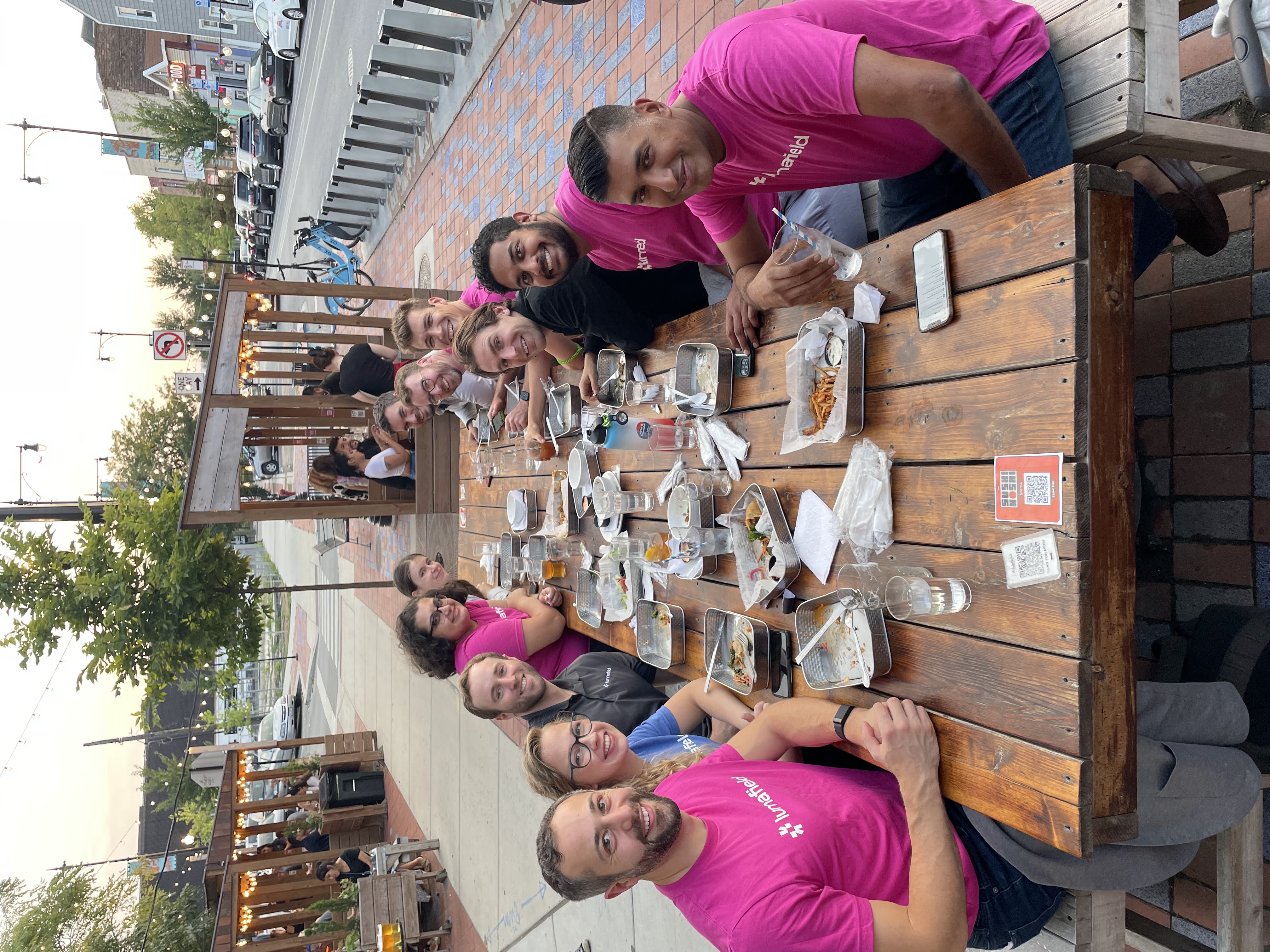
Part of my work at Lumafield
The Lumafield Launch
From stealth to public — building the entire go-to-market from scratch
The Opportunity
Lumafield was building something genuinely new: industrial CT scanners that actually fit most budgets. The incumbent machines cost upwards of a million dollars. Lumafield's hardware-as-a-service model brought that down to $36K per year. For manufacturers who needed to see inside their products without destroying them, this was a category shift.
When I joined, the company was still operating in stealth. No brand, no website, no go-to-market — just a small team in Cambridge, MA with a working product and serious investors. I was the first commercial hire. My job was to build the foundation that would take the company from invisible to undeniable.
The Pre-Launch Launch
In month one, the team needed something to put in front of prospects. I built a first website under our stealth name, "Meter" — nothing elaborate, just enough to give sales a real URL and capture the first inbounds. It was temporary by design, but it mattered. It meant we could have actual conversations before the official launch.
A few months in, I launched Scan of the Month as a pre-launch hype engine. The idea was simple: take compelling CT scans of recognizable objects, publish them, and let curiosity do the work. It built an audience organically before the product was even public. By launch day, we had people waiting.
Building the GTM
When our second marketing hire came on board — now the Head of Marketing — we got to work on the rebrand. "Meter" became "Lumafield." We built the positioning, the messaging architecture, and the launch strategy from scratch. Two people, full ownership.
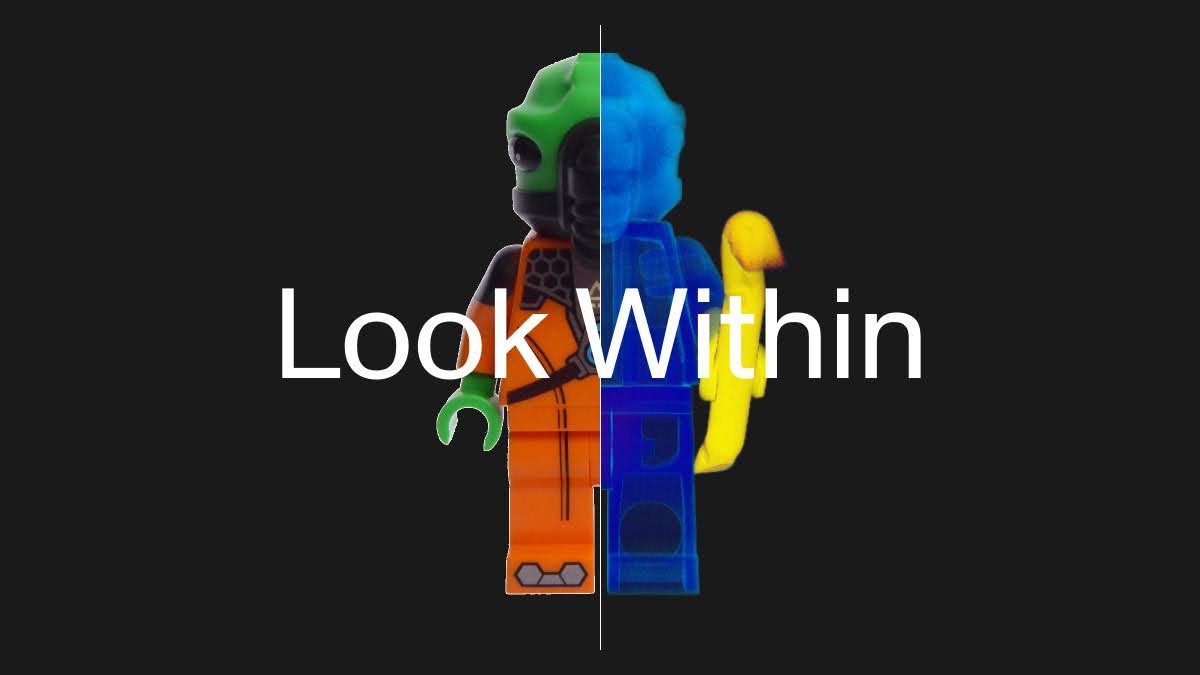
I orchestrated the launch website with a small internal team and Play Studios, a design agency. The tagline — "Look Within" — captured exactly what the technology did and what the brand stood for.
My approach was to hire myself out of each function as I got it working. I stood up content marketing, then handed it off. Did the same with tradeshow coordination, product marketing, and photo/video production. Each time I got something to a place where it could run without me, I moved to the next problem. That's how we scaled without a large team.
The Launch
We went public in April and orchestrated our first tradeshow around the launch. The website was live, the brand was real, and the content engine was running. Scan of the Month had already seeded the community — we had an audience on day one.
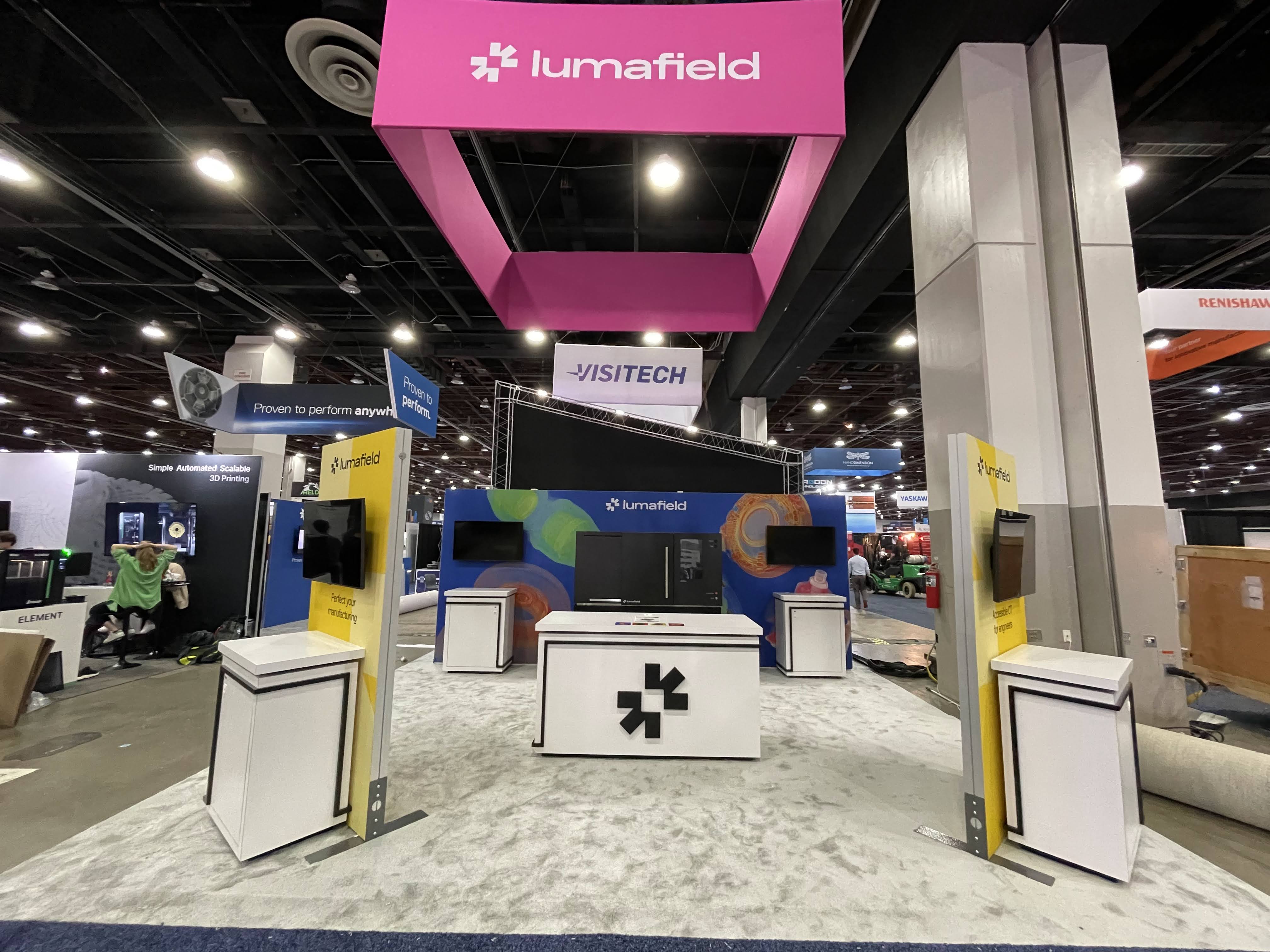
The launch wasn't a single press moment. It was everything coming together at once: brand, product, story, and a tradeshow floor full of people who'd been following along.
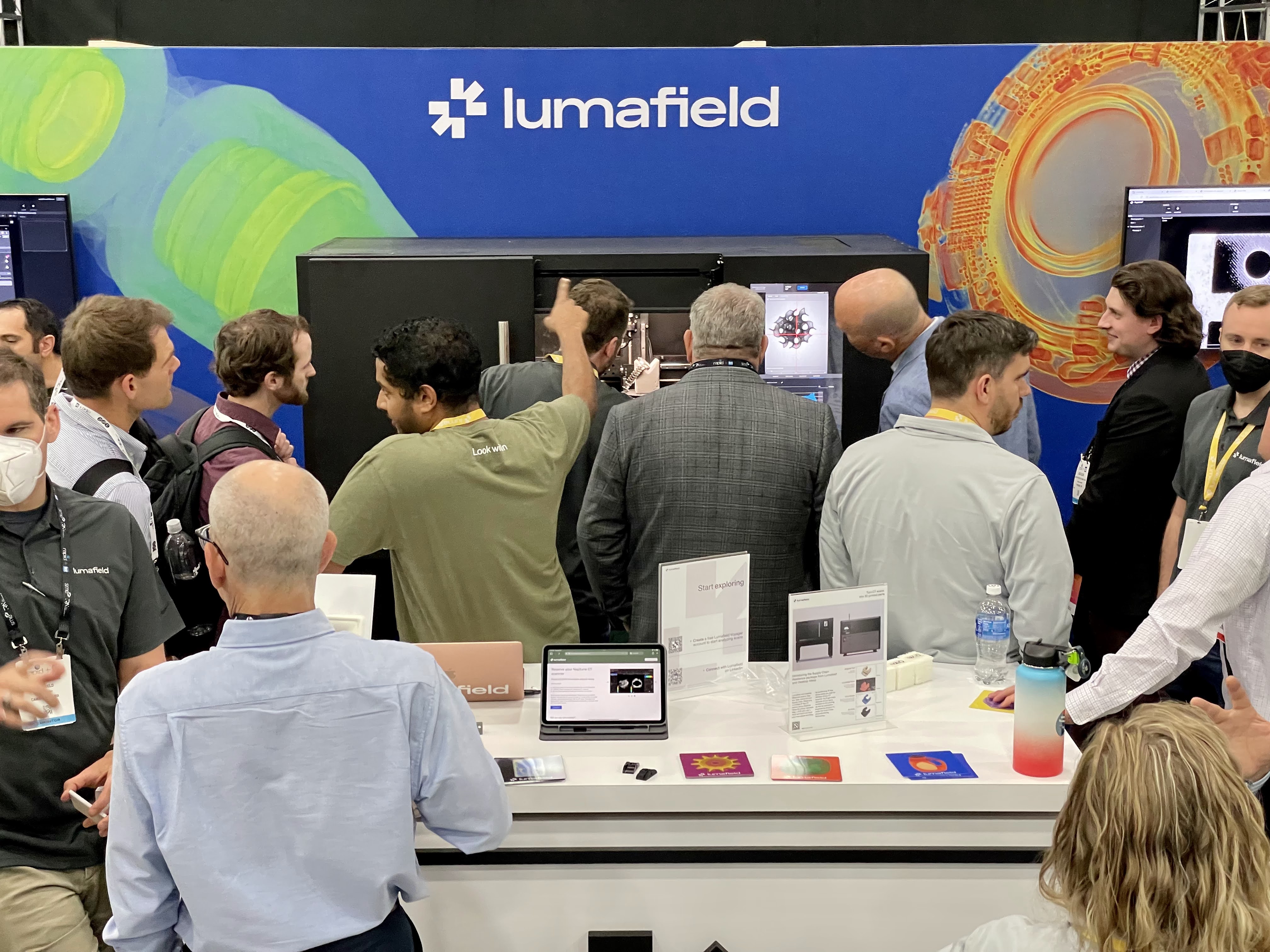
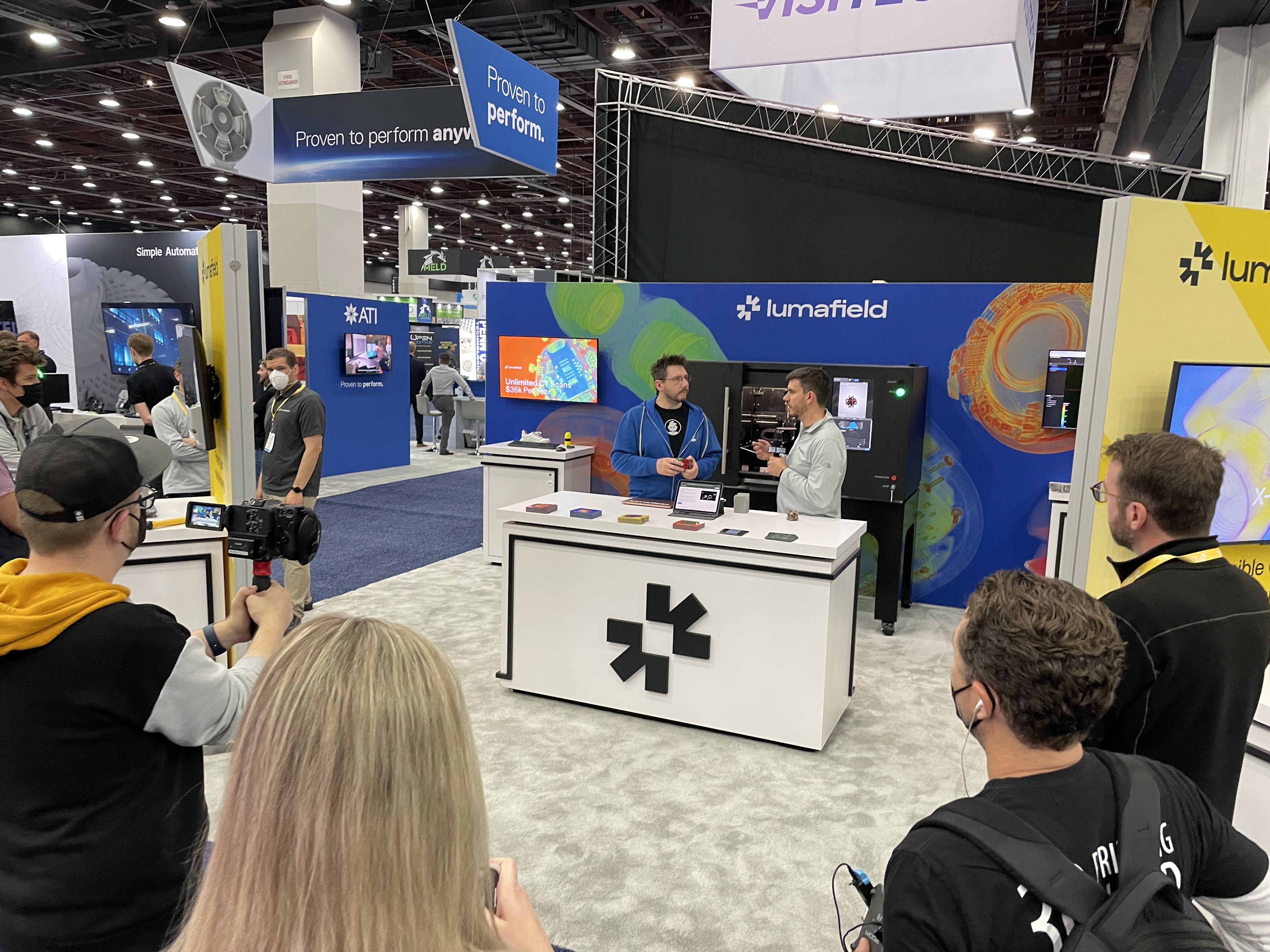
The ultimate proof: people pulling out credit cards at the booth to put down reservations on their machines. The CEO and I orchestrated that motion together — demo to conversation to commitment, right on the tradeshow floor.
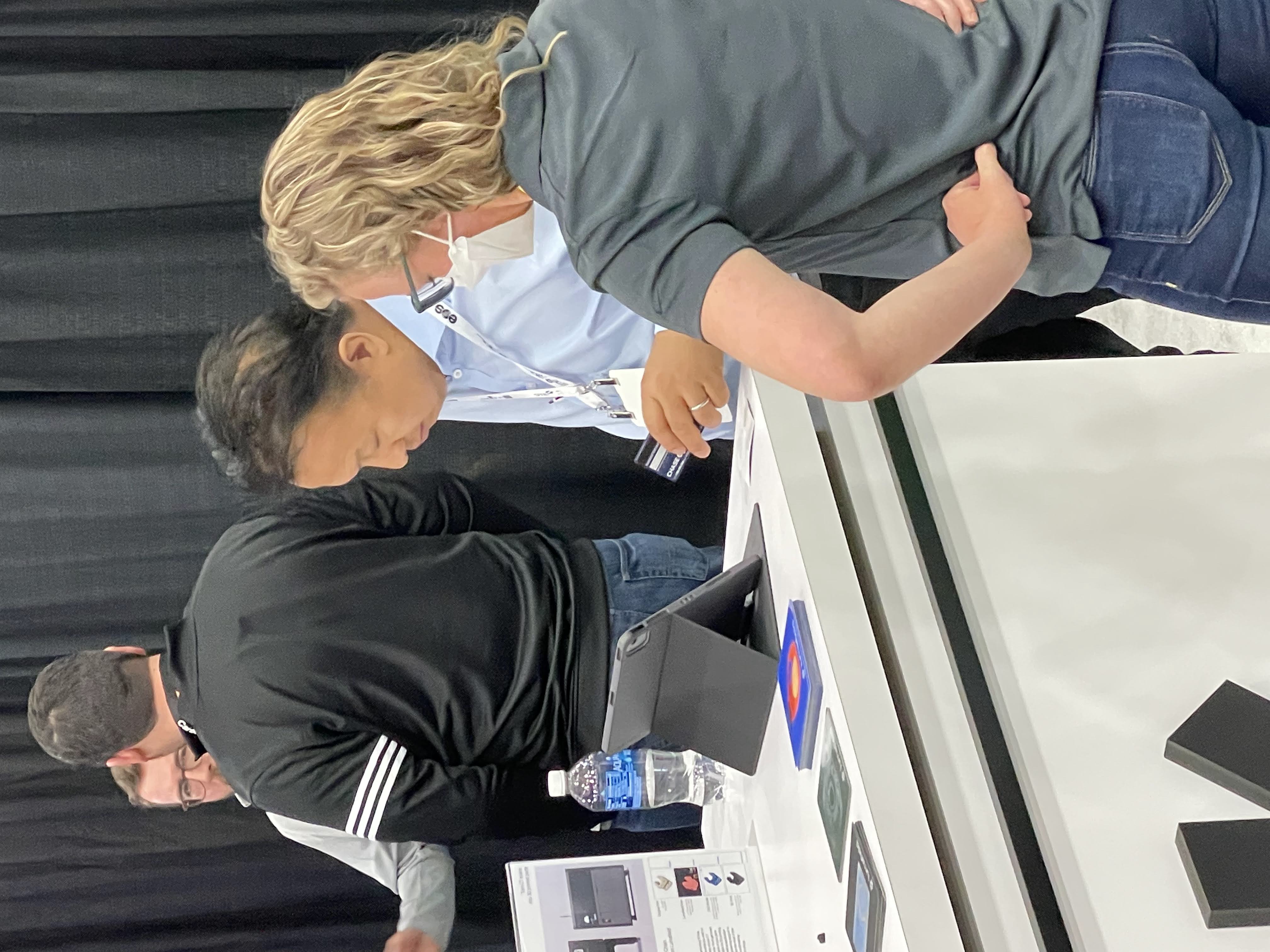
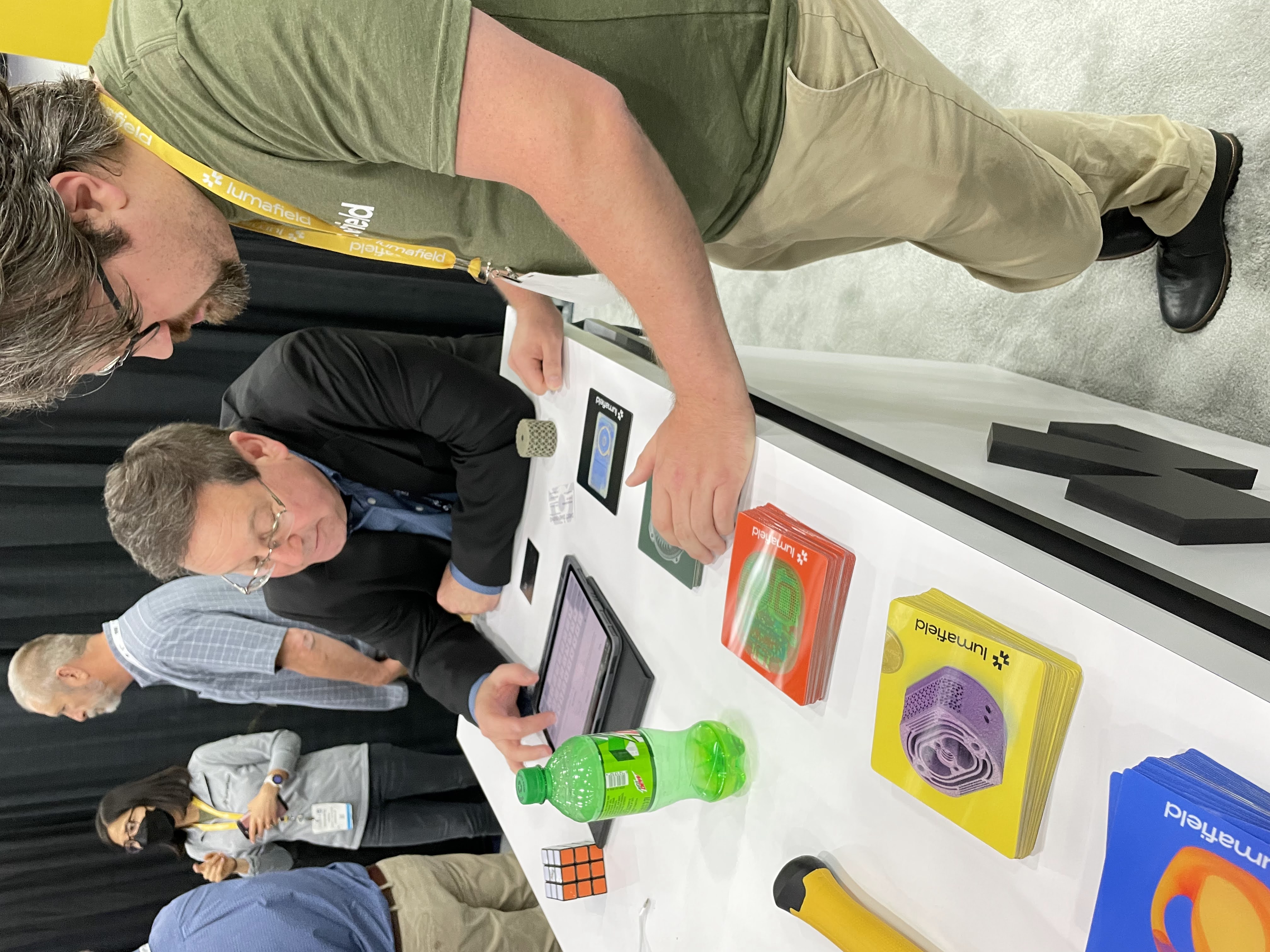
In the first few months after launch, we gathered over 50 reservations for 2-year hardware subscriptions. The positioning worked, the product resonated, and the GTM motion was validated.
The Launch Touchdown
I always framed the launch as a campaign, not an event. April was the starting gun, not the finish line. Our flagship industry tradeshow in September was the bookend — the launch touchdown.
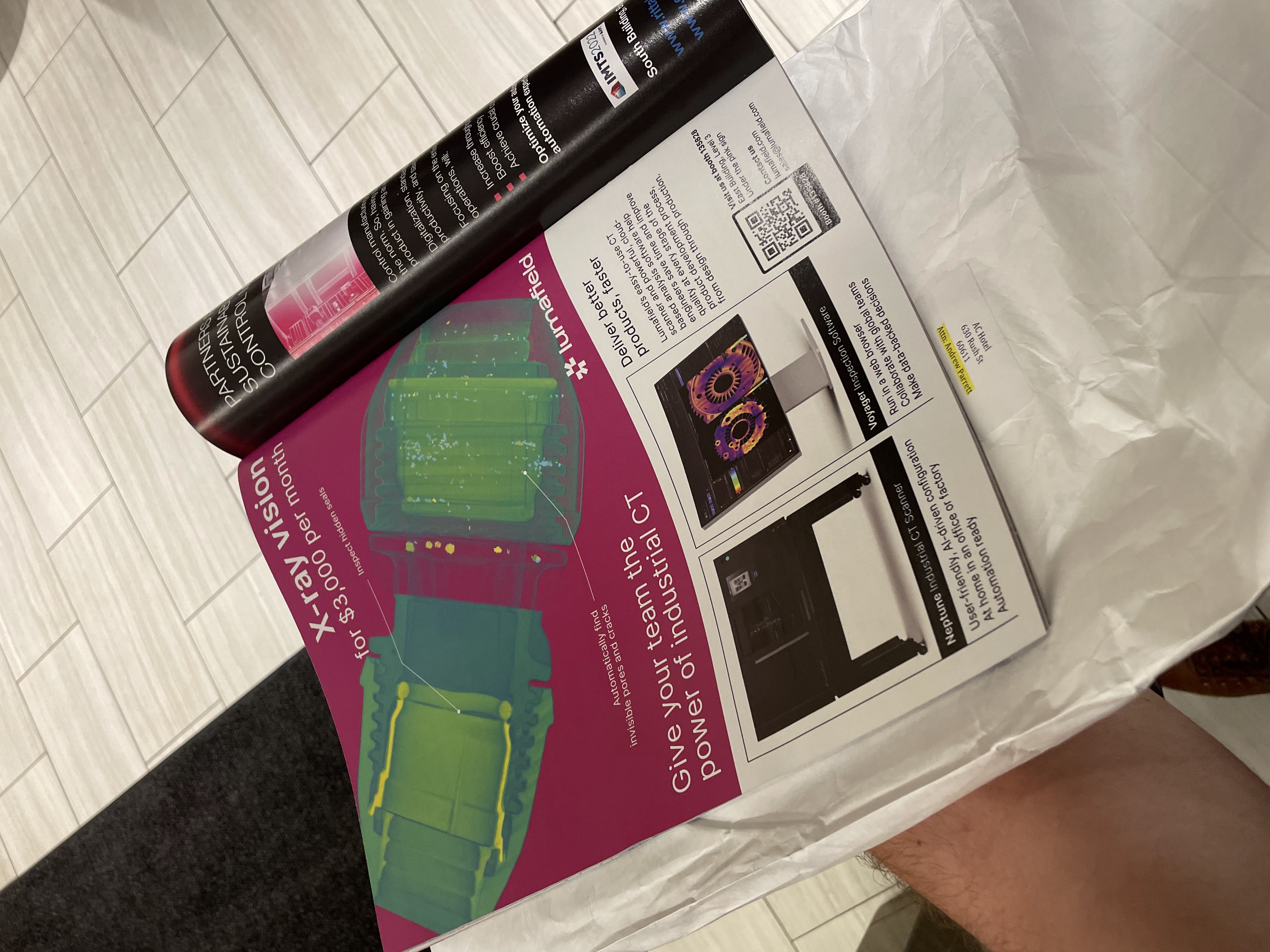
In the six months between, we iterated on everything. Messaging got sharper. The content flywheel picked up speed. I placed ads in industry magazines to expand the reach beyond the digital channels we'd built.
By September, the booth had evolved. Bigger presence, sharper graphics, more confidence in the pitch. The team had grown and the playbook was proven.
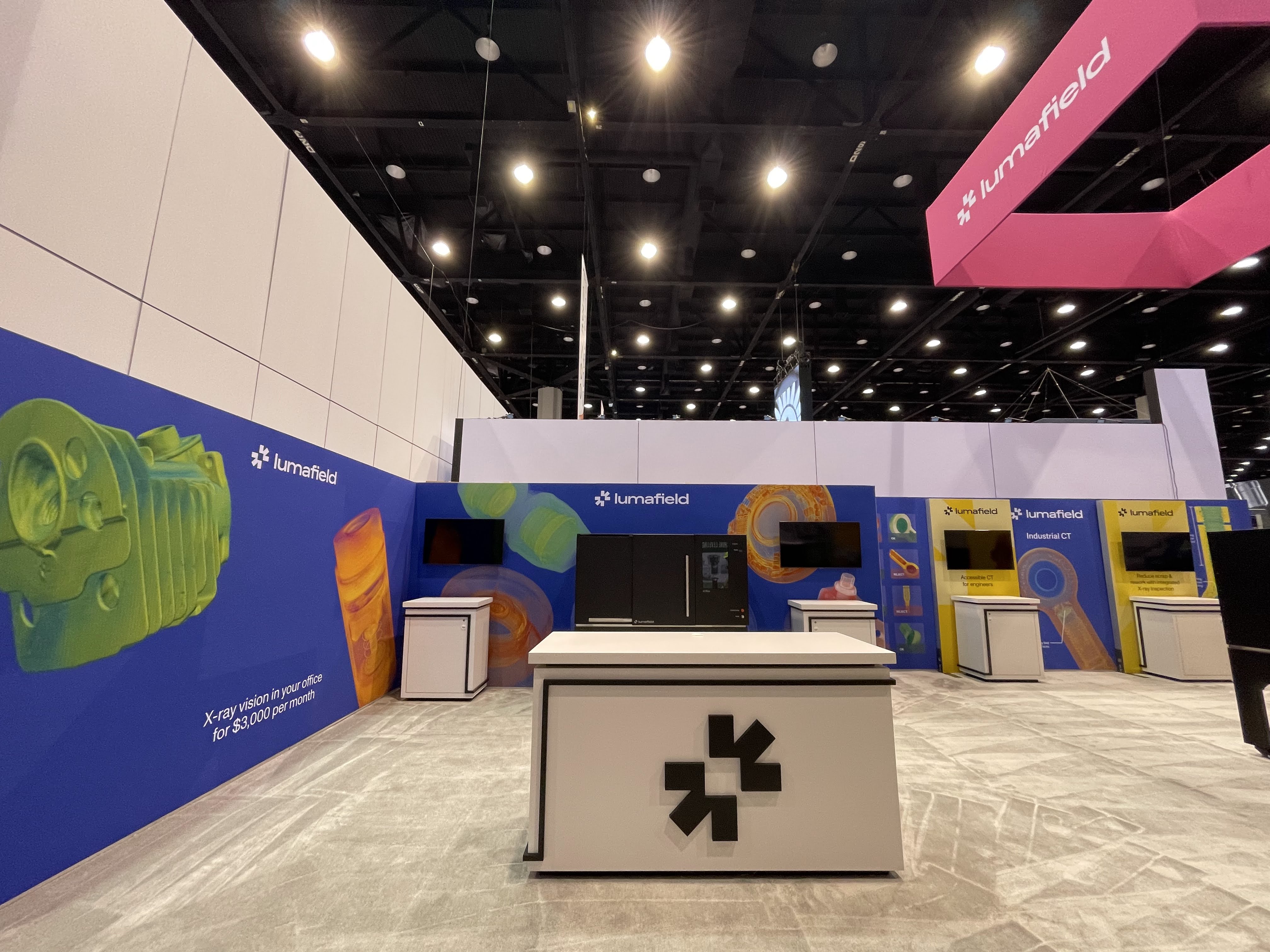
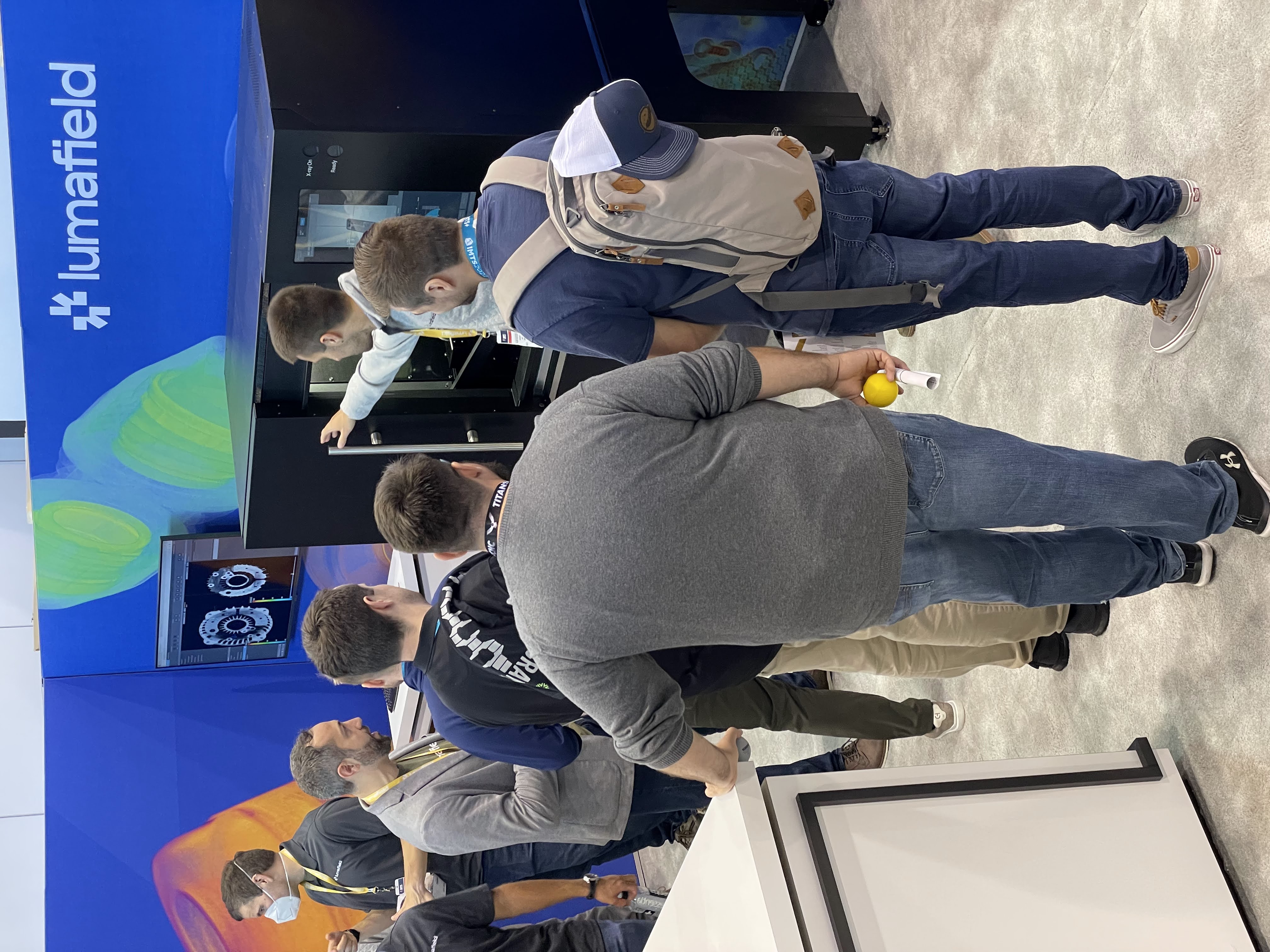
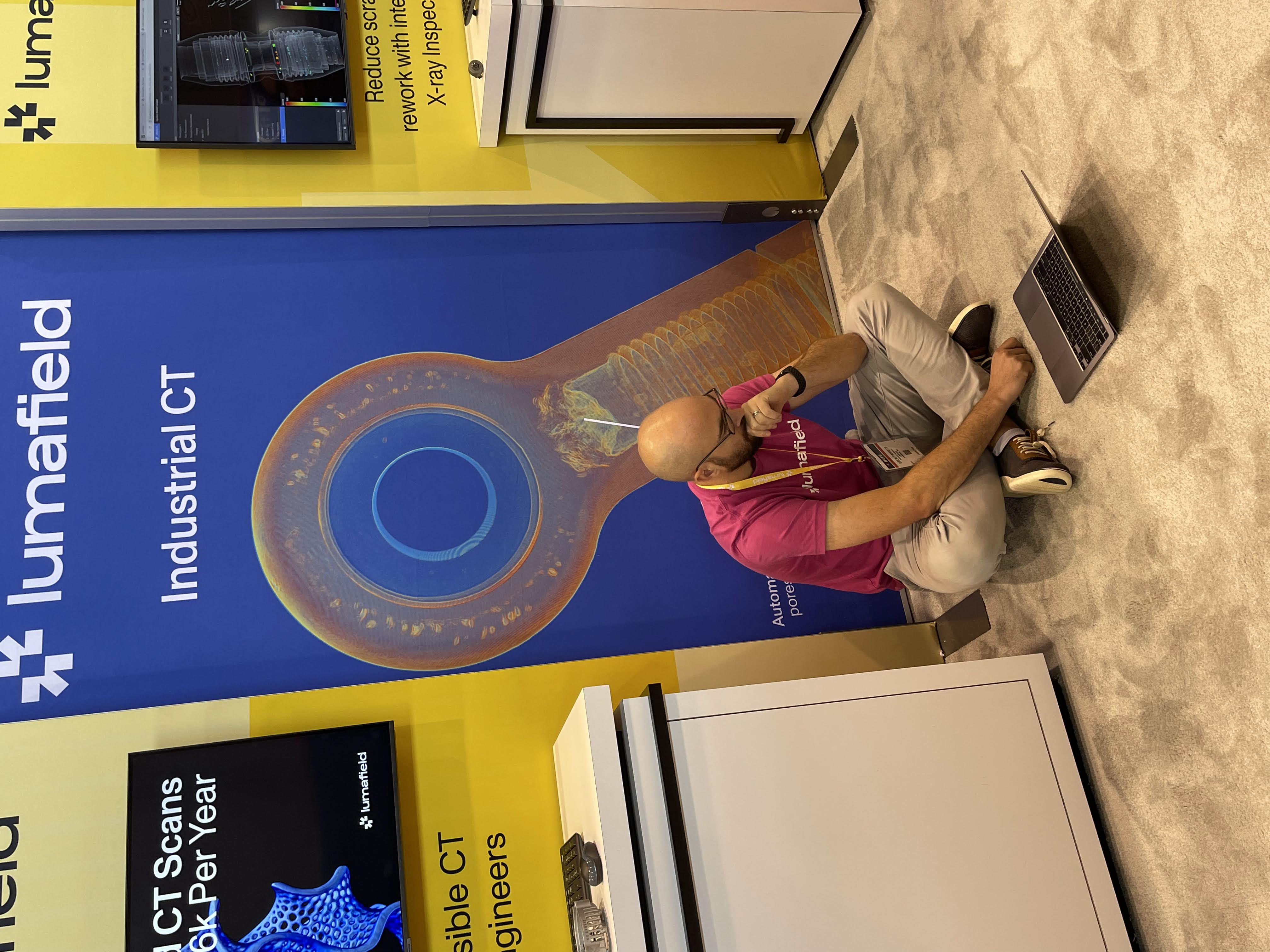
The launch campaign — from stealth website to tradeshow touchdown — had done its job. Lumafield had a presence that matched what the technology deserved.