Part of my work at Lumafield
Scan of the Month
A content-led growth engine I built from scratch that became Lumafield's marketing cornerstone
Visit scanofthemonth.com →The Origin
Lumafield builds industrial CT scanners — the kind that let you see inside a product without cutting it open. We'd brought the cost down from roughly $1M to $36K a year, which meant a whole new class of engineers could suddenly afford the technology. The hardware was compelling. But most people had no idea what industrial CT scanning actually looked like in practice.
I thought the best way to show them was just to show them. I started Scan of the Month as a simple idea: pick a few interesting objects, scan them on our Neptune CT system, and dig into the manufacturing, brand lore, and hidden engineering behind each one. No product pitch. Just genuinely interesting content about the hidden world inside everyday things.
The Content
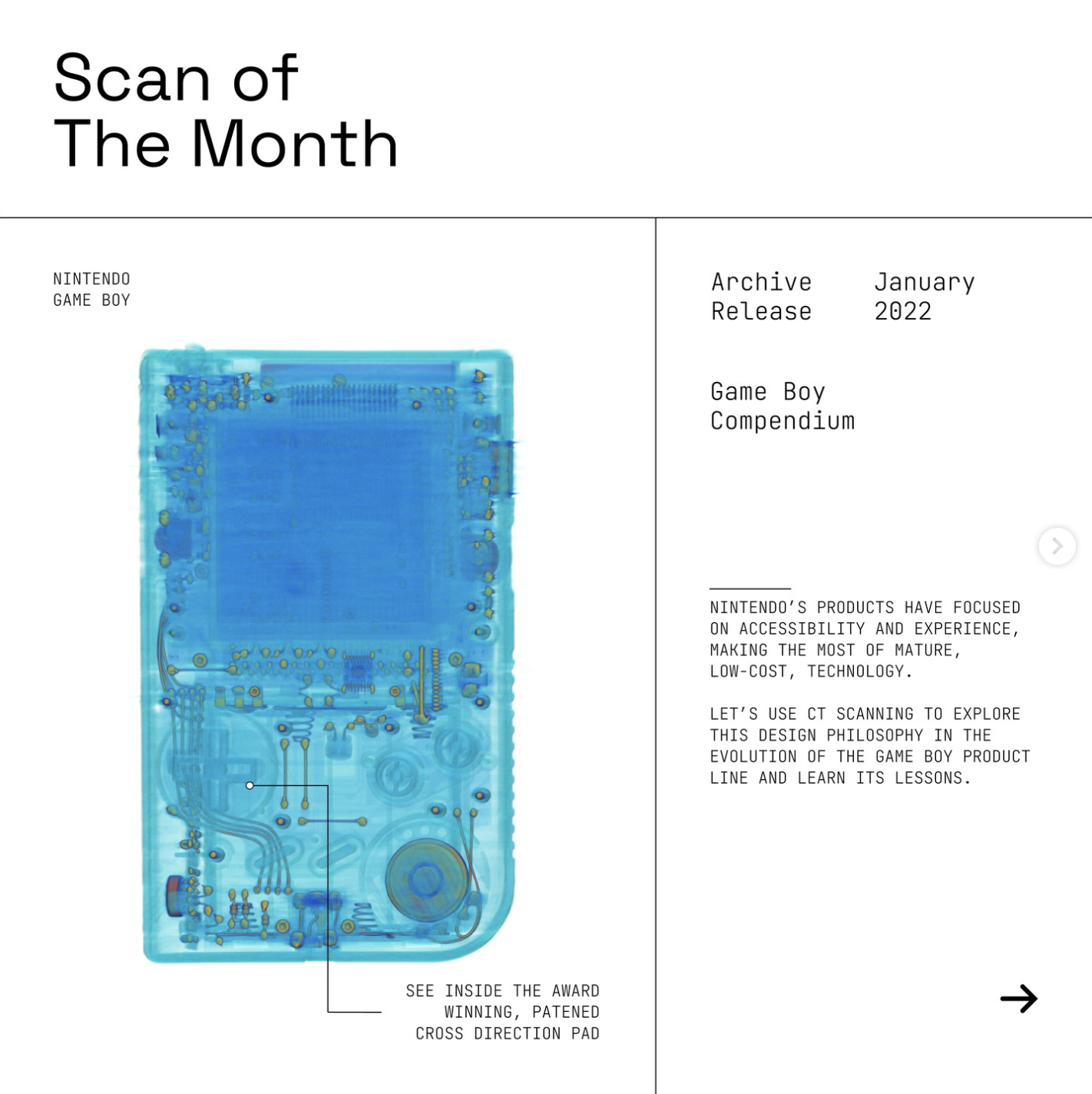
The format evolved through experimentation. Early editions were loose — the first was two Lego minifigures, the next was three AirPods variants, and the Game Boy edition spiraled into an entire compendium of Nintendo handhelds. Over time I dialed it in: three objects, three narrative points per object, structured enough that a contractor could follow a templatized implementation and I could hand out clear directives to generate content at scale.
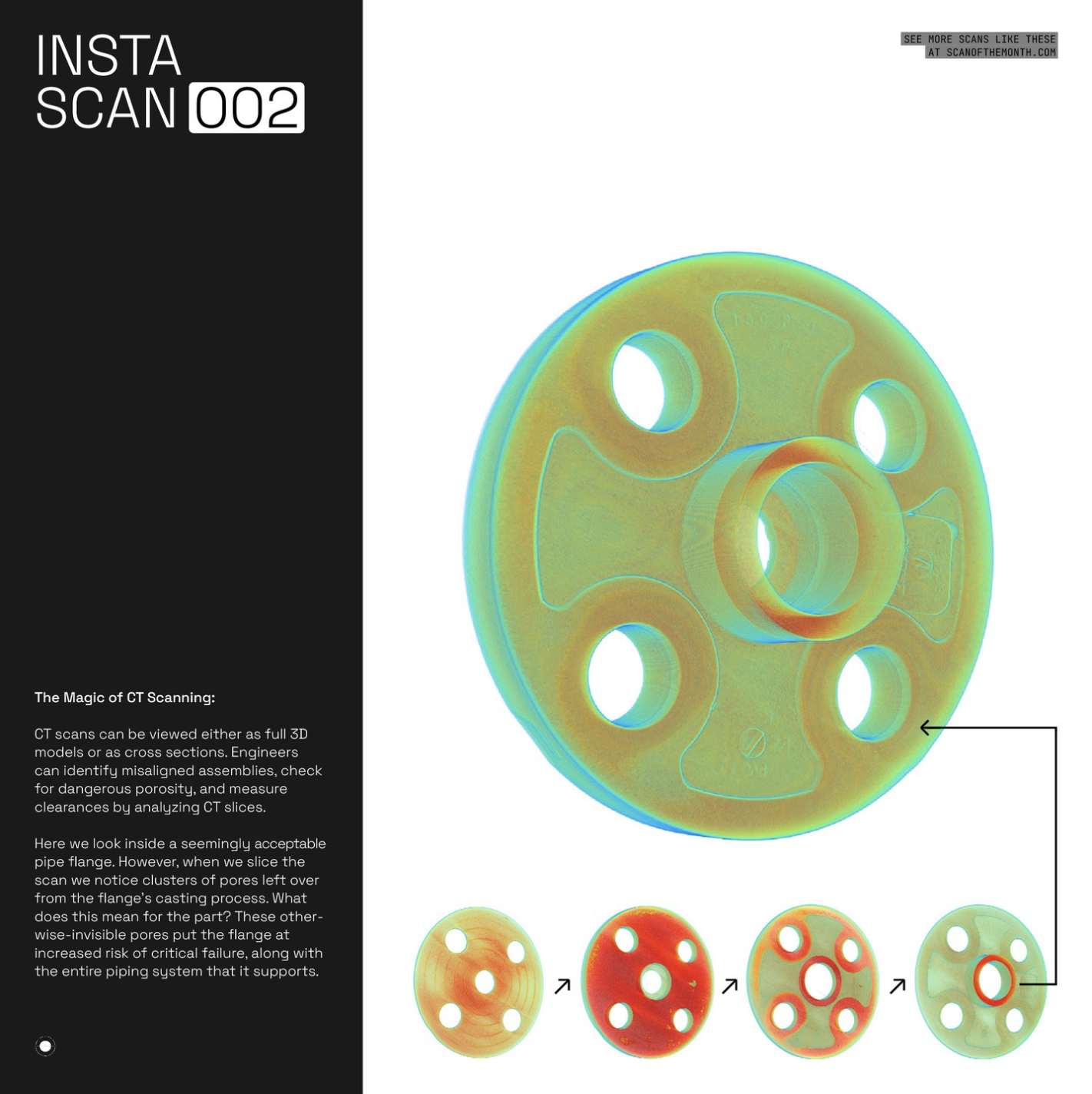
The production was hands-on. I'd run the scans, work through the data, and then build the visual narrative around what was most striking. CT scans have a way of making the familiar look completely alien — and that tension is what made the content shareable.
That structure mattered. It made the content repeatable without me being the bottleneck, while keeping each edition editorially sharp — like the Sriracha bottle cap scan that explored a trademarked cap design, or the Game Boy compendium that traced Nintendo's design philosophy through their hardware internals.

The Growth
The first time a post hit #1 on Hacker News, the traffic was immediate and overwhelming. The Lego Minifigures scan alone pulled 500+ points and 150+ comments. Engineers love this stuff — the combination of real hardware, clean data visualization, and zero marketing fluff landed perfectly with that audience. We hit #1 multiple times.
It wasn't just Hacker News. The content went viral on Reddit — the Sriracha bottle cap blew up on r/EngineeringPorn, the Nintendo handhelds spread across gaming communities. Each post found its own audience organically.
That traffic converted. We built an email list of 4,000+ qualified signups — people who were genuinely interested in what industrial CT scanning could do, not just passersby. The list became the top-of-funnel channel for Lumafield's sales and marketing motion.
The Business Impact
What started as my side project inside the company eventually became the company's primary marketing strategy. The signal was clear: this content reached the right people in a way that paid ads and trade show booths didn't.
The most telling metric was engineering hires. We had candidates come in for interviews who said they'd found Lumafield through Scan of the Month. That's the kind of brand-building that compounds — the content kept working long after it was published, reaching engineers and technical buyers through organic search and word of mouth.
The FT Partnership
At some point, the Financial Times reached out to collaborate on an article. The result was an interactive FT piece on fixing broken wireless earbuds — using our CT scanning technology to look inside consumer electronics. That was a signal that the project had grown well beyond the engineering community.
Getting that kind of inbound from a publication like the FT — without a PR firm, without a press outreach campaign — validated the core bet: if you make genuinely interesting content about something real, the audience finds you. That's the version of content marketing that actually works.